
Ultrasound-Guided Galvanic Electrolysis Technique (USGET)
A precise, ultrasound-guided treatment designed to support the body's response to chronic tendon and soft-tissue injuries
At Sampson Regen, Dr. Steve Sampson uses Ultrasound-Guided Galvanic Electrolysis Technique (USGET) as part of a comprehensive approach to selected musculoskeletal injuries and persistent tendon-related pain.
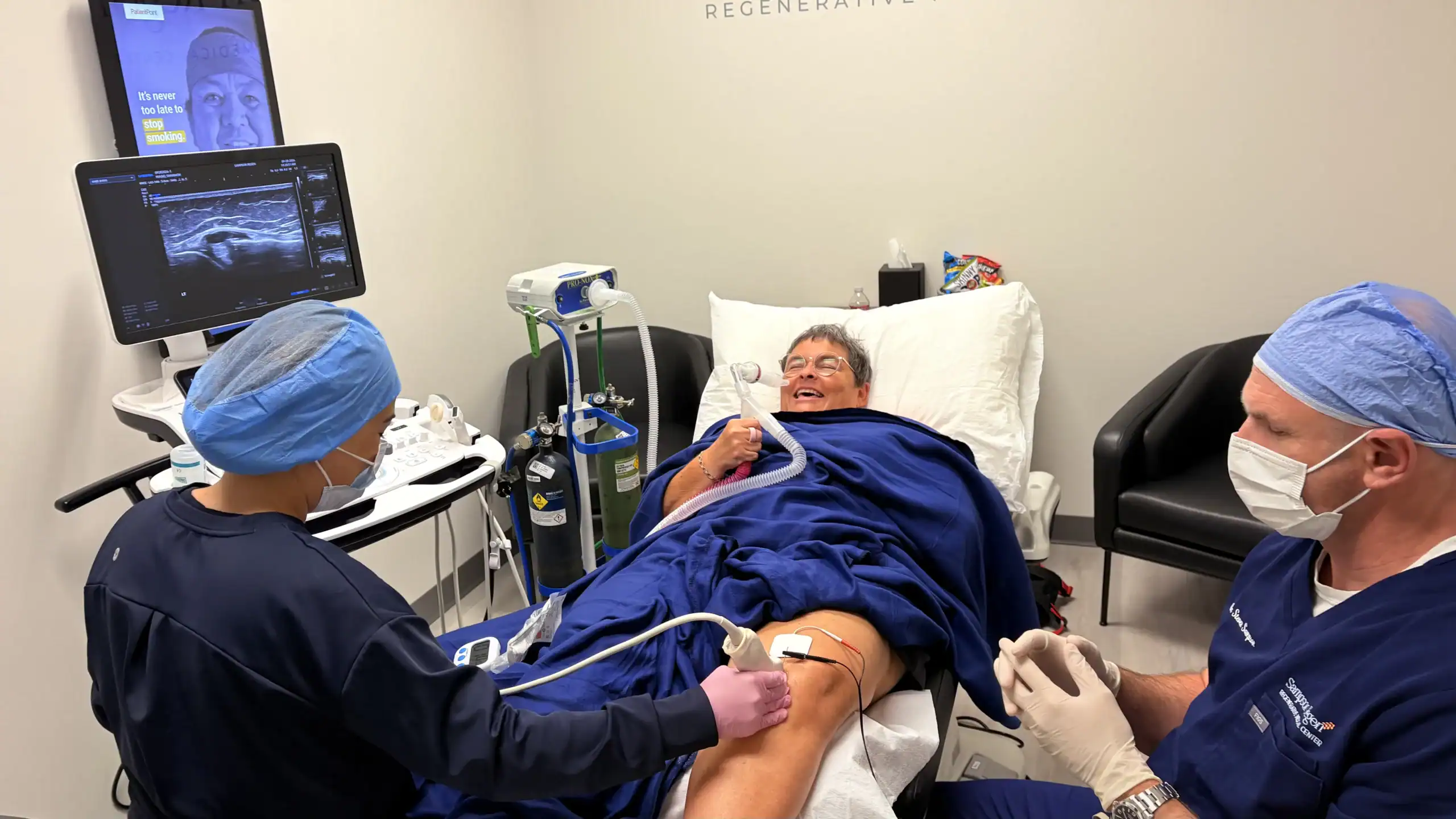
USGET combines real-time ultrasound imaging, a fine needle, and a controlled electrical current delivered directly to the targeted tissue. The goal is to precisely address areas of abnormal or chronically irritated tissue while supporting the body’s natural healing and rehabilitation processes.
Unlike treatments that are delivered broadly over the skin or surrounding tissues, USGET allows the physician to visualize the treatment area and guide the needle to the intended location.
How Does USGET Work?
USGET is performed using ultrasound guidance to identify the relevant anatomy and precisely place a fine needle into the targeted tissue.
A controlled galvanic electrical current is then delivered through the needle.
The electrical stimulus produces a localized biological response in the treated tissue. Research on percutaneous electrolysis suggests that this response may influence local tissue remodeling and pain mechanisms, although the exact biological mechanisms and their clinical significance continue to be studied.
The procedure may be incorporated into a broader treatment plan or used as a stand-alone intervention. Depending on the condition, that plan may include therapeutic exercise, rehabilitation, and other evidence-based modalities.
Why Ultrasound Guidance Matters
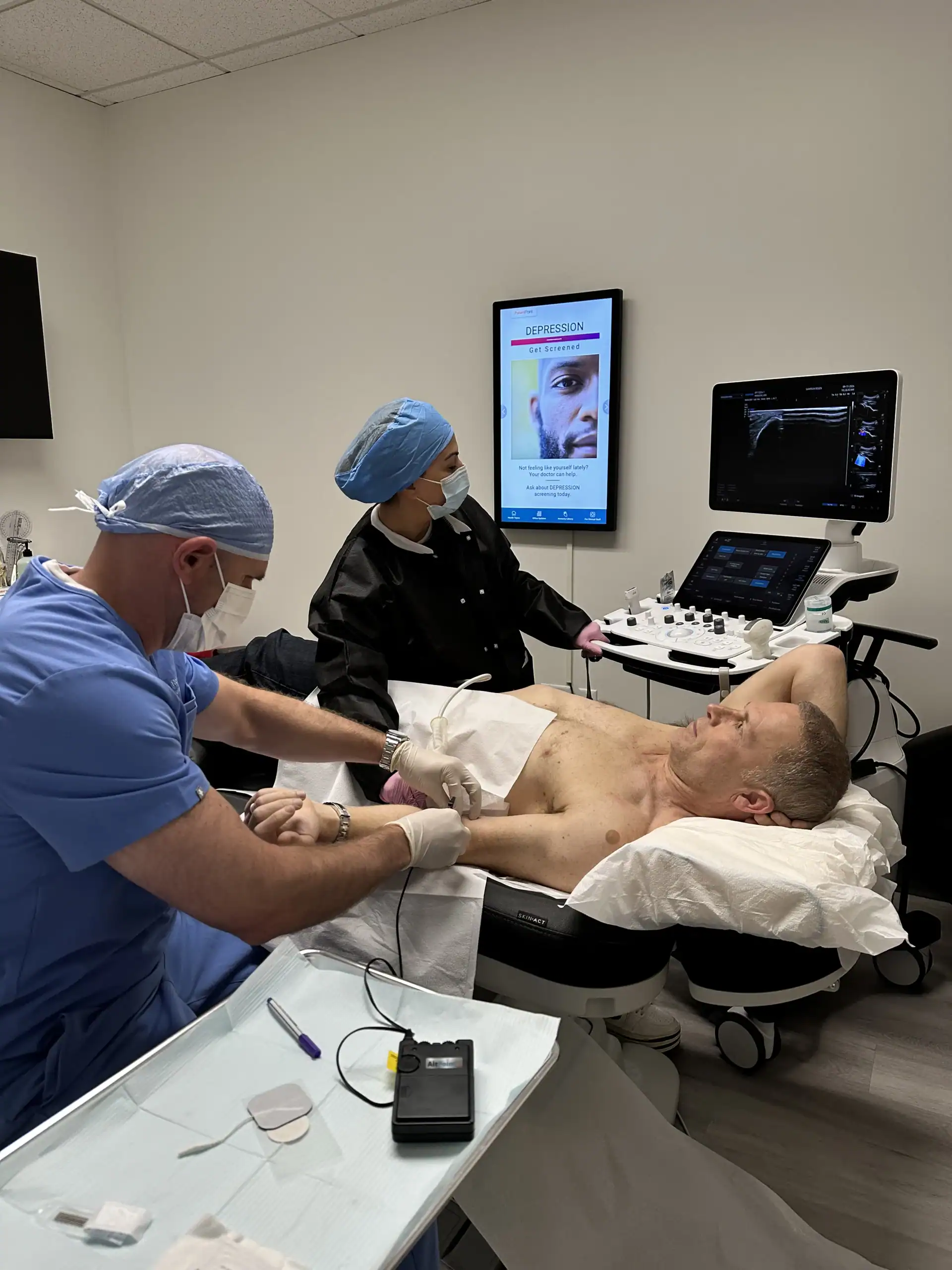
This allows your provider to:
- Identify the relevant tendon or soft-tissue structure
- Visualize surrounding anatomy
- Guide needle placement with precision
- Deliver the treatment to the intended area
- Assess tissue characteristics during the procedure
Ultrasound-guided percutaneous electrolysis has been studied in a variety of musculoskeletal conditions, particularly tendinopathies.
What Conditions May Be Considered for USGET?
Research on percutaneous electrolysis has examined its use in several musculoskeletal conditions, particularly chronic or persistent tendinopathies.
Depending on the individual diagnosis and clinical findings, USGET may be considered as part of treatment for conditions involving:
- Patellar tendinopathy
- Achilles tendinopathy
- Rotator cuff and shoulder tendinopathies
- Lateral and medial elbow tendinopathy
- Plantar fasciitis
- Certain nerve, muscle, and soft-tissue injuries
The published literature includes randomized clinical trials and systematic reviews involving several of these conditions. However, results vary by diagnosis, treatment protocol, and rehabilitation program, so USGET is not appropriate for every patient or every type of injury.
USGET and Rehabilitation
At Sampson Regen, procedures are considered within the context of the patient’s overall diagnosis, tissue quality, activity level, and rehabilitation goals.
Research suggests that percutaneous electrolysis may be particularly useful when combined with an appropriate exercise or rehabilitation program rather than viewed as a replacement for rehabilitation. A 2024 systematic review and meta-analysis found that percutaneous electrolysis combined with other interventions was associated with improvements in pain in the short and intermediate term, although the authors rated the overall certainty of evidence as low to very low.
Your treatment plan may therefore include rehabilitation exercises and, when appropriate, other modalities used at Sampson Regen to support recovery and function.
What Can Patients Expect?
USGET is a minimally invasive procedure performed with ultrasound guidance.
A patient may experience some discomfort during or immediately after treatment, and temporary soreness or other localized effects can occur following needle-based procedures.
The number of areas treated and frequency of treatments depend on the condition being treated and the individual’s clinical response. There is no single treatment protocol or guaranteed recovery timeline, and outcomes can vary from patient to patient. However, most patients typically receive a second treatment two weeks following the first treatment for optimal results.
Dr. Sampson will determine whether USGET is appropriate after evaluating your symptoms, physical examination findings, imaging, and overall treatment goals.
An Evidence-Informed Approach to Care
USGET is an evolving treatment modality with a growing body of research.
Clinical studies have reported improvements in pain and function for some musculoskeletal conditions, particularly when percutaneous electrolysis is combined with structured rehabilitation. At the same time, systematic reviews note limitations in the existing literature, including differences in treatment protocols, small study populations, and variable study quality.
Is USGET Right for You?
If you have persistent tendon or soft-tissue pain that has not responded adequately to conservative care, an evaluation with Dr. Sampson can help determine whether USGET or another treatment approach may be appropriate.
Schedule an evaluation with Sampson Regen to learn more about our customized treatment options.
Medical Disclaimer: USGET is not appropriate for everyone. Individual results vary, and no treatment can guarantee a particular outcome or recovery timeline. Treatment recommendations are based on an individual’s diagnosis, medical history, examination, imaging, and other clinical factors.
References
- Gómez-Chiguano GF, Navarro-Santana MJ, Cleland JA, et al. Effectiveness of ultrasound-guided percutaneous electrolysis for musculoskeletal pain: a systematic review and meta-analysis. Pain Medicine. 2021;22(5):1055-1071.
- Asensio-Olea L, Leirós-Rodríguez R, Marqués-Sánchez MP, et al. Efficacy of percutaneous electrolysis for the treatment of tendinopathies: a systematic review and meta-analysis. Clinical Rehabilitation. 2023;37(6):747-759.
- Hissa ML, Araújo GA, De-La-Cruz-Torres B. Effectiveness of percutaneous needle electrolysis to reduce pain in tendinopathies: a systematic review with meta-analysis. Journal of Sport Rehabilitation. 2024;33(5):307-316.
- Tavares-da-Silva AC, Barroso-Barrosen F, Moreira-Marcos A, Silva-Lima A. Effect of percutaneous electrolysis on pain and disability in tendinopathy: a systematic review and meta-analysis. Journal of Bodywork & Movement Therapies. 2024;40:134-144.
- Abat F, Gelber PE, Polidori F, Monllau JC, Sánchez-Ibáñez JM. Clinical results after ultrasound-guided intratissue percutaneous electrolysis and eccentric exercise in the treatment of patellar tendinopathy. Knee Surgery, Sports Traumatology, Arthroscopy. 2015;23(4):1046-1052.
- Arias-Buría JL, Truyols-Domínguez S, Valero-Alcaide R, et al. Ultrasound-guided percutaneous electrolysis as an adjunct to exercise and manual therapy for subacromial pain syndrome: a randomized clinical trial. Journal of Pain. 2018;19(10):1107-1116.
- Rodríguez-Sanz J, Rodríguez-Rodríguez S, López-de-Celis C, et al. Biological and cellular effects of percutaneous electrolysis: a systematic review. Biomedicines. 2024;12(12):2818.
- Doménech-García V, Pecos-Martín D, Blasco-Abadía J, et al. Placebo and nocebo effects of percutaneous needle electrolysis and dry needling: a three-arm randomized double-blinded trial in patellar tendinopathy. Frontiers in Medicine. 2024;11:1381515.